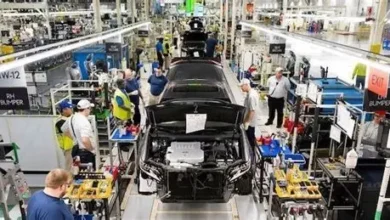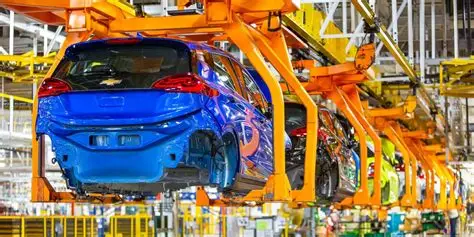
The automotive landscape is defined by constant flux, but the current era represents a seismic shift, compelling Global Original Equipment Manufacturers (OEMs) to undertake a fundamental and rapid adaptation to drastically changing demand patterns. These shifts are not merely cyclical; they are structural, driven by a powerful confluence of regulatory mandates, technological revolutions, evolving consumer preferences, and geopolitical turbulence. The demand curve is simultaneously polarizing toward high-tech electric vehicles (EVs) and affordable, no-frills personal mobility in emerging markets, while the traditional mass-market internal combustion engine (ICE) segment contracts.
To survive and thrive, OEMs must radically overhaul their product portfolios, manufacturing footprints, supply chain strategies, and customer relationship models. This adaptation involves navigating immense financial risk, challenging entrenched business models, and embracing a speed of change unprecedented in the industry’s history. A deep analysis of this adaptation reveals the strategic pivots being executed across portfolios, manufacturing, and distribution to secure market relevance in the face of this multi-faceted disruption.
1. Fundamental Drivers Reshaping Global Demand
The current demand patterns are dictated by three interconnected forces: regulatory pressure, technological availability, and consumer psychology.
A. Regulatory Mandates and Forced Electrification
Government policy, particularly around emissions, is the single most powerful factor artificially stimulating EV demand and penalizing ICE demand.
- Hard Phase-Out Deadlines: Binding legislative commitments, such as the European Union’s 2035 ban on new CO2-emitting vehicles and similar mandates in key US states, create a firm, non-negotiable demand for Zero Emission Vehicles (ZEVs). This regulatory pressure forces OEMs to launch EV models irrespective of immediate organic consumer pull.
- Fleet CO2 Compliance: Intermediate emission targets compel manufacturers to sell a high volume of ZEVs to avoid crippling financial penalties (e.g., the EU’s CO2 fines). This corporate compliance strategy often involves artificially boosting ZEV demand through preferential pricing or allocation to high-volume fleet customers.
- Subsidies and Tax Incentives: Consumer demand for ZEVs is heavily influenced by government subsidies, tax credits, and rebates. OEMs must constantly adapt their pricing, supply chain sourcing, and manufacturing location to align with ever-changing local content rules (e.g., the US Inflation Reduction Act, or IRA) to keep their products eligible and competitive.
- Urban Restrictions: The implementation of Ultra-Low Emission Zones (ULEZ) and congestion charges in major global cities directly reduces the functional utility and demand for older, high-emission private ICE vehicles, channeling demand toward shared or electric mobility solutions.
B. Consumer Polarization and the Value Equation
Consumer demand is not shifting uniformly; it is polarizing across the economic and technological spectrum.
- Demand for High-Tech EVs: Affluent consumers in developed markets are increasingly demanding premium, high-range, feature-rich EVs that offer a superior digital experience, high performance, and rapid charging capabilities. This fuels demand for large battery packs and software-defined vehicle (SDV) architectures.
- Emerging Market Affordability: The massive growth in demand in emerging markets is overwhelmingly for basic, reliable, and highly affordable personal mobility. These buyers prioritize low purchase price, extreme durability, and simple maintenance over complex technology, leading to a focus on smaller cars or highly localized ICE and micro-EV platforms.
- The Decline of the Mid-Range ICE: The traditional, non-premium, mid-range ICE vehicle segment is shrinking rapidly, squeezed by the upward pull of affordable ZEVs and the downward pull of budget emerging market vehicles. This forces OEMs to eliminate many legacy product lines.
- Shift to Mobility-as-a-Service (MaaS): Urban populations are showing a decreasing propensity for private vehicle ownership, favoring flexible, shared, or subscription-based mobility. OEMs must adapt their sales strategy to cater to large fleet customers instead of individual private buyers.
C. Technological Disruptors and Competitive Pressure
New entrants and technological advancements are forcing incumbents to react to unanticipated demand.
- The ‘Tesla Effect’: The success of new entrants in integrating the customer experience, offering superior software, and providing long-range capabilities redefined consumer expectations for the EV. OEMs must adapt their product design and customer service to match this new benchmark of demand.
- Chinese Cost Leadership: The entry of Chinese automakers leveraging low-cost battery technology (LFP) creates a massive demand shock in the affordability segment globally, compelling OEMs to develop ultra-low-cost EV platforms to avoid being priced out of key markets (Europe and emerging economies).
- Component Obsolescence: The rapid advancement in battery chemistry and electric powertrain technology creates a high rate of obsolescence for current EV components, forcing OEMs to continually update their products, accelerating demand for new models.
2. Adaptation in Product Portfolio and Manufacturing Footprint
OEMs are executing radical shifts in product strategy and global manufacturing to align with the new, polarized demand patterns.
A. Radical Portfolio Simplification and Rationalization
The complexity of managing both ICE and EV models across global markets is economically unsustainable.
- Platform Consolidation: OEMs are consolidating dozens of legacy ICE platforms onto a small number of highly flexible, modular EV platforms (e.g., the “skateboard” architecture). This reduces long-term R&D costs, increases speed to market, and allows for rapid model variants to meet diverse regional demands.
- Segment Elimination: Brands are making the painful decision to exit unprofitable, low-volume segments, particularly small, entry-level ICE cars in developed markets, which can no longer absorb the cost of modern safety and emission compliance.
- Focus on High-Margin EVs: During the transition, OEMs are prioritizing the launch of high-margin EV SUVs and crossovers that appeal to early adopters and can absorb the initial high cost of battery packs, allowing capital to be reinvested into developing lower-cost, mass-market EVs later.
- Dual Product Strategy: A clear distinction is being made between “Global Premium EV Platforms” and “Localized Affordable Platforms,” ensuring that high-tech features go only where consumers will pay for them, and simplicity reigns where affordability is paramount (e.g., LFP battery-only vehicles for emerging markets).
B. Reworking the Global Manufacturing Footprint
The shift to EVs and local content mandates fundamentally changes where cars are built.
- Regionalization of Supply Chains: Regulations like the IRA force a move away from globalized sourcing to regional manufacturing hubs (North America, Europe, Asia) to secure subsidies and control logistics. This requires massive, immediate investment in new Gigafactories near assembly plants
. 2. Greenfield EV Plants: Instead of converting old ICE factories, many OEMs are opting for greenfield, EV-only facilities designed from the ground up for simplicity, high automation (e.g., Giga-casting), and flexible platform assembly, optimizing for the new demand curve. 3. Factory Retooling for Flexibility: Existing ICE plants are being retooled to handle mixed-model production (ICE, hybrid, and small-volume EV assembly) to manage the unpredictable pace of the transition and meet short-term demand for high-profit ICE vehicles. 4. Localized Manufacturing for Emerging Markets: To achieve the necessary cost base for markets like India and ASEAN, manufacturers are establishing deeply localized manufacturing and R&D centers that prioritize local sourcing and compliance with regional content rules, rather than relying on imports.
C. Software and Service Integration
The product itself is adapting to a demand for digital features and recurring revenue.
- Software-Defined Vehicle (SDV) Architecture: New EV platforms are built around centralized, zonal electronic architectures to enable Over-the-Air (OTA) updates, diagnostics, and Features-as-a-Service (FaaS) monetization, catering to the demand for personalized, digitally upgradable mobility.
- Data-Driven Development: OEMs are collecting vast amounts of data on vehicle usage and feature adoption to inform product development, ensuring that capital is allocated only to features (both hardware and software) that customers are actively demanding and willing to pay for.
- Integration with Energy Ecosystems: The EV is adapting to demand for Vehicle-to-Grid (V2G) and smart charging capabilities, making the car a key component of the customer’s home energy management system, a crucial selling point in energy-conscious markets.
3. Supply Chain and Logistics Adaptation
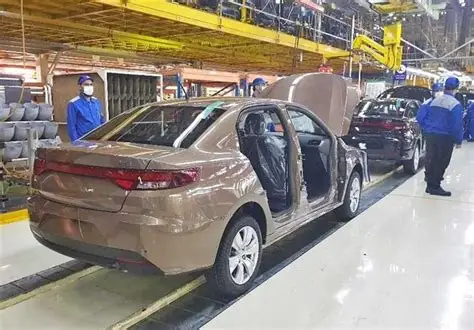
The volatility in demand for ICE components versus EV components, combined with geopolitical pressures, requires a complete re-engineering of the supply chain.
A. Securing the Critical Mineral Supply
The shift in demand to EVs requires securing the raw materials that power them, often by displacing traditional commodity markets.
- Direct Sourcing and Offtake Agreements: OEMs are bypassing traditional suppliers and signing direct, long-term offtake agreements with miners and refiners of lithium, nickel, and cobalt to secure price stability and supply certainty, mitigating the massive volatility driven by demand spikes.
- Diversification of Battery Chemistry: Adaptation involves managing demand for two core chemistries: high-density NCM/NCA for premium, long-range models, and cost-effective LFP for mass-market and utility vehicles, requiring complex, dual-chain sourcing strategies.
- Circular Economy Investment: Demand is adapting to regulations requiring high rates of recycled content in new batteries. OEMs are investing in or partnering with battery recycling facilities to secure future mineral supply and manage the environmental liability of the battery’s end-of-life.
B. Re-engineering the Component Supplier Base
The shift in demand destroys long-standing supplier relationships and creates new partnerships.
- ICE Supplier Contraction: OEMs are gradually reducing their reliance on traditional, Tier 1 suppliers specializing in ICE components (e.g., pistons, transmissions), forcing those suppliers to rapidly pivot or consolidate.
- In-Sourcing Key EV Components: To gain cost and technological control, OEMs are increasingly choosing to in-source key EV components (e.g., battery module and pack assembly, electric motors, and power electronics) rather than relying on external suppliers, ensuring they control the most valuable parts of the new EV value chain.
- Semiconductor Prioritization: The demand for highly connected, SDVs requires prioritizing the sourcing of specialized power semiconductors (e.g., Silicon Carbide or SiC), forcing direct, deep engagement with semiconductor manufacturers.
C. Logistics for Just-In-Time (JIT) EV Production
The move to the Agency Model and DTC sales necessitates a logistics system tailored for direct fulfillment, not dealer stocking.
- Optimized Battery Logistics: Battery packs are large, heavy, and safety-sensitive. The logistics system is adapting to move these components Just-in-Time (JIT) from Gigafactories to assembly lines, minimizing inventory and maximizing fresh component integration.
- Build-to-Order Fulfillment: The new sales strategy aims for build-to-order, eliminating long inventory cycles. Logistics must adapt to rapidly transport custom-configured vehicles directly from the factory to the customer’s preferred delivery point, whether it’s an Agent location or the customer’s home.
4. Adaptation in Sales, Distribution, and Customer Relations
The sales model, anchored by the franchised dealer system, is undergoing the most contentious but necessary change to meet digital demand patterns.
A. The Pivot to the Agency Model
OEMs are abandoning the traditional three-tier sales model in favor of centralized pricing and control.
- Centralized Pricing: To meet consumer demand for pricing transparency and to control regulatory compliance costs, OEMs are adopting the Agency Model. The manufacturer sets a non-negotiable fixed price, and the dealer acts as an agent for a fixed commission.
- Digital First Sales: The demand for seamless, instant transactions means the core sales journey—ordering, financing, and customization—is moving online, with physical dealer locations transforming into “experience centers” for test drives and delivery.
- Direct Customer Relationship: By retaining ownership of the customer data and the financial transaction, OEMs gain a direct line of communication, enabling personalized marketing, predictive service offers, and direct FaaS monetization, a direct response to competitor success.
- Inventory Rationalization: The transition reduces the need for massive, locally-held, high-cost dealer inventory. Inventory is centralized and managed by the OEM, directly aligning supply with real-time digital demand.
B. Reworking the Aftermarket and Service Model
Service demand is shifting from mechanical repair to software diagnostics and battery maintenance.
- Service Center Transformation: Dealerships must adapt their service bays to handle high-voltage system diagnostics, battery module replacement, and software troubleshooting. This requires massive investment in specialized equipment and technician training, driven by safety regulations.
- Predictive and OTA Service: Demand is shifting from reactive repair to proactive, software-based service. OEMs use OTA diagnostics to alert customers and service centers to potential component failures before they occur, improving quality and customer satisfaction.
- Focus on Fleet Servicing: The growing demand from high-volume, shared, and subscription fleets necessitates the development of dedicated, rapid-turnaround fleet service centers to minimize vehicle downtime and maximize utilization.
C. Targeting Emerging Market Distribution
The distribution strategy must adapt to the physical and financial realities of developing economies.
- Micro-Dealership Footprints: In densely populated or remote emerging regions, traditional large dealerships are replaced by smaller, lower-cost, high-volume micro-dealerships or mobile sales units, maximizing physical reach while minimizing capital expenditure.
- Simplified Financial Products: OEMs are working with local partners to provide micro-financing and simplified, short-term lease/subscription options to overcome the high barrier of limited consumer credit, adapting the sales model to the financial demand profile.
- Digital Transaction Priority: Due to high mobile phone penetration, the entire sales and post-sales service booking process is driven by localized super-apps and digital platforms, adapting to a tech-savvy demographic that bypasses traditional sales channels.

Final Thought
Global OEMs are not merely optimizing their operations; they are undertaking an existential strategic overhaul to adapt to a new paradigm of demand. This adaptation is structurally compelled by the hard deadlines of climate regulation and the disruptive competitive pressure from agile EV players and cost-effective Chinese rivals. Survival hinges on the successful execution of a polarized product strategy—developing high-tech, digitally integrated EVs for mature markets alongside affordable, durable mobility solutions for emerging ones. Critically, this requires rapid vertical integration of the battery supply chain, the complete rework of global manufacturing footprints into regional hubs, and the wholesale abandonment of the traditional sales model in favor of centralized, digital-first relationships. The speed and scale of this adaptation will determine which legacy brands successfully transition from being hardware manufacturers to dominant global mobility and software service providers.