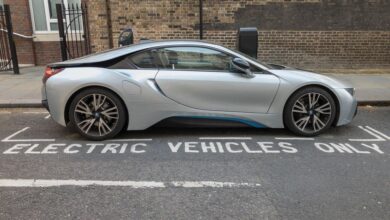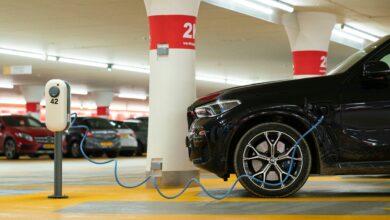
The global automotive landscape is undergoing a monumental, non-reversible transformation, establishing the electric vehicle (EV) as the new standard for personal and commercial transportation. This shift transcends transient economic cycles and reflects deep-seated changes in technology, consumer values, and regulatory priorities worldwide. The trajectory of EV growth indicates a move past the status of a niche product or a futuristic concept; the EV is rapidly becoming the default choice, fundamentally reshaping manufacturing processes, energy grids, and urban planning across the globe. Analyzing this profound transition requires focusing on the structural forces that are cementing the EV’s dominance and the immense challenges accompanying this rapid industrial evolution.
1. Technological Foundations of EV Dominance
The core reason for the EV’s ascendance is the exponential advancement in the underlying technology, particularly in battery systems and vehicle architecture. These improvements systematically erode the key historical disadvantages of electric mobility.
A. Battery Energy Density and Range Solutions
Improvements in battery chemistry and packaging are directly addressing consumer anxiety regarding driving distance.
- Cell-to-Pack (CTP) Architectures: Innovative battery designs that integrate cells directly into the pack structure, eliminating unnecessary modules, increase energy density and reduce weight, translating directly into longer driving ranges without increasing the overall battery footprint.
- Advancements in Anode and Cathode Materials: The continuous evolution of active materials, including the introduction of silicon-based anodes and high-nickel cathodes, pushes the theoretical limits of energy storage, allowing for sustained vehicle ranges that exceed the daily needs of over 95% of drivers.
- Thermal Management Sophistication: Highly efficient liquid cooling and heating systems ensure that the battery operates within optimal temperature windows, preserving both range stability in extreme weather conditions and the long-term health and lifespan of the battery itself.
B. Rapid Evolution of Charging Infrastructure
The development of high-power charging technology is making “refueling” an EV comparable in convenience to an ICE vehicle for most use cases.
- Ultra-Fast Charging Protocols: The shift to higher-voltage architectures (800V and above) permits charging speeds that can replenish hundreds of kilometers of range in minutes, drastically reducing road-trip stop times and making long-haul electric travel practical.
- Charging Standard Consolidation: The industry’s coalescing around unified charging standards, such as the North American Charging Standard (NACS), simplifies the user experience, reduces proprietary barriers, and accelerates the infrastructure build-out by ensuring broad compatibility.
- Vehicle-to-Grid (V2G) Capabilities: EVs are increasingly being designed not just as energy consumers but as mobile storage units capable of feeding power back to the grid. This functionality incentivizes off-peak charging and transforms the vehicle into a valuable asset for grid stability and residential backup power.
C. Software-Defined Vehicle (SDV) Architecture
The EV platform provides the ideal foundation for the SDV, where the vehicle’s functionality is primarily defined and updated through software.
- Over-the-Air (OTA) Updates: The ability to deploy software updates remotely allows manufacturers to fix bugs, enhance performance, introduce new features, and even improve range efficiency post-sale, fundamentally changing the vehicle ownership lifecycle.
- Advanced Driver Assistance Systems (ADAS): The EV’s native reliance on high-capacity computing and sensor arrays makes it the optimal platform for advanced ADAS and, eventually, fully autonomous driving capabilities, integrating safety and convenience features previously unavailable.
- Digital Personalization: The SDV architecture facilitates deep personalization, allowing the vehicle to adapt its driving profile, infotainment, and interior environment to individual user preferences, transforming the driving space into a highly configurable digital hub.
2. Market Dynamics and Consumer Acceptance
The record sales volume reflects a tipping point in consumer psychology, where the EV is viewed not as a compromise, but as a superior, desirable product.
A. Total Cost of Ownership (TCO) Advantage
While the initial purchase price remains a barrier for some, the long-term financial advantages of EV ownership are becoming increasingly compelling.
- Reduced Fuel Expenses: Replacing gasoline or diesel with grid electricity dramatically lowers running costs, a factor particularly attractive to high-mileage drivers and commercial fleets, providing predictable, long-term savings.
- Minimal Maintenance Requirements: EVs eliminate the need for oil changes, spark plugs, complex exhaust systems, and transmissions, drastically reducing routine maintenance and the risk of costly mechanical failures associated with ICE powertrains.
- Brake Regeneration Longevity: Electric vehicles primarily use regenerative braking, meaning the traditional friction brakes are used less frequently and last significantly longer, further contributing to lower maintenance costs over the vehicle’s lifespan.
B. Superior Driving Experience and Performance
The intrinsic characteristics of electric power delivery offer a fundamentally better driving experience that appeals to the mass market.
- Instantaneous Torque: Electric motors deliver maximum torque from zero revolutions per minute, providing immediate, seamless, and powerful acceleration that surpasses most ICE vehicles in responsiveness.
- Acoustic Comfort: The near-silent operation of the electric motor creates a dramatically quieter cabin environment, contributing to reduced driver fatigue and a more luxurious feel, regardless of the vehicle segment.
- Optimized Vehicle Dynamics: The placement of the heavy battery pack low in the chassis creates a low center of gravity, improving handling, stability, and reducing the risk of rollover, enhancing both safety and driving pleasure.
C. The Normalization of the EV Lifestyle
As EV penetration increases, the concept of electric mobility shifts from novel to normative, influencing social acceptance.
- Increased Visibility and Familiarity: The sheer number of EVs on the road and the increasing ubiquity of charging points make the technology familiar and less intimidating, eroding skepticism among potential late adopters.
- Positive Second-Hand Market Development: The emergence of a robust, high-volume used EV market provides data on battery longevity and resale value, reassuring first-time buyers and removing financing uncertainty for lenders.
- Peer Influence and Social Proof: As friends, family, and colleagues adopt EVs, their positive experiences provide powerful social validation, accelerating the purchasing decision for those who were previously hesitant.
3. Global Regulatory and Industrial Alignment
The transition is reinforced by synchronized regulatory action and massive industrial investment that locks in the EV future.
A. Hard Deadlines for ICE Phase-Out
Major economies and automotive markets are implementing definitive regulatory cliffs that mandate the end of new ICE sales, making the EV pivot an industrial necessity.
- Zero-Emission Vehicle (ZEV) Mandates: Legislative action across Europe and North America requires manufacturers to meet annually increasing quotas of ZEV sales, directly pushing production allocation toward electric models.
- Urban Access Restrictions: Cities worldwide are implementing Ultra-Low Emission Zones (ULEZ) and similar clean air initiatives that restrict or heavily tax ICE vehicle access, making EVs the only practical choice for urban dwellers and last-mile logistics.
- Public Procurement Directives: Government and state agencies are increasingly mandated to purchase only ZEVs for their fleets, providing a large, stable, high-volume order book that helps manufacturers achieve necessary economies of scale.
B. Strategic Investment in Gigafactories
The industry is engaged in a historic, multi-trillion-dollar effort to build the foundational infrastructure for EV mass production: the battery gigafactory.
- Regionalization of Supply Chains: Geopolitical and logistical pressures, exemplified by policies like the U.S. IRA and European initiatives, are forcing manufacturers to build battery and component supply chains closer to the final assembly plants, reducing shipping costs and increasing resiliency.
- Closed-Loop Recycling Systems: To secure long-term resource availability and meet sustainability goals, massive investment is flowing into battery recycling technologies, creating a “closed-loop” economy for critical minerals like lithium and cobalt, ensuring the longevity of the EV supply.
- Standardization in Manufacturing: The need for rapid, high-volume production is driving standardization in battery cell formats and pack assembly processes, allowing new manufacturing facilities to come online faster and operate more efficiently.
C. The Role of Geopolitical Competition
The competition to lead the EV sector has become a matter of national economic security and technological supremacy, primarily between East Asia, Europe, and North America.
- Technological Export Dominance: Countries that established early dominance in battery manufacturing (e.g., China and South Korea) are leveraging this lead to become global technology exporters, influencing manufacturing standards worldwide.
- Trade Policy and Tariffs: Governments are utilizing trade tariffs and local content requirements to protect domestic industries and incentivize investment, creating complex regionalized manufacturing hubs and supply dynamics that affect final vehicle cost and availability.
- Mineral Access Diplomacy: Securing long-term access to essential battery minerals requires complex international agreements and strategic investments in mining operations globally, elevating resource procurement to a matter of state diplomacy.
4. Systemic Challenges of the Transition
Despite its inevitable dominance, the rapid shift to the EV standard presents acute, systemic challenges that must be addressed to ensure a stable and equitable transition.
A. Grid Capacity and Energy Generation
The mass adoption of EVs requires a commensurate increase in clean electricity generation and distribution capability.
- Load Balancing and Smart Charging: The primary challenge is not the total energy required, but managing peak demand when millions of cars plug in simultaneously. Implementing smart charging solutions that automatically shift charging times to off-peak hours is crucial for grid stability.
- Transmission and Distribution Upgrades: Local distribution networks (transformers, substations) often require expensive and time-consuming upgrades to handle the high electrical loads of residential charging clusters and dedicated charging hubs.
- Renewable Integration Velocity: The environmental promise of EVs hinges on the rapid deployment of renewable energy (solar, wind). The pace of renewable generation deployment must be accelerated to match the pace of EV sales, ensuring the grid can supply clean power for the burgeoning fleet.
B. Affordability and Equity of Access
While TCO is favorable, the high initial purchase price creates an equity gap that risks excluding lower- and middle-income segments.
- The Price Parity Tipping Point: The industry is still awaiting the mass-market availability of high-quality EVs priced equivalently to entry-level ICE cars, without reliance on subsidies, to truly unlock universal access.
- Used Car Market Accessibility: Ensuring that the growing stock of used EVs remains affordable and that their battery health can be reliably assessed is vital for providing economical options for second-hand buyers.
- Multi-Unit Dwelling (MUD) Charging Solutions: Solving the charging problem for residents of apartment buildings and dense urban areas who lack dedicated garage access requires coordinated private and public investment in curbside, streetlight, and communal charging infrastructure.
C. End-of-Life Management and Sustainability
The high-volume nature of the EV transition requires robust planning for the end-of-life handling of battery packs.
- Second-Life Applications: Maximizing the value of retired vehicle batteries by repurposing them for stationary energy storage (e.g., residential power backup, grid stabilization) is essential before final recycling.
- Recycling Infrastructure Scale: Building the necessary high-capacity, safe, and efficient battery recycling facilities to process millions of tons of battery materials is a monumental task requiring specific industrial technology and policy support.
- Toxicology and Safety: Developing global standards for the safe handling, transport, and decommissioning of high-voltage battery packs is critical for protecting workers and the environment throughout the vehicle lifecycle.
5. Future Evolution of the Transportation Standard
The establishment of the EV as the standard initiates a new era of innovation in transport and mobility.
A. The Integration of Mobility-as-a-Service (MaaS)
EVs are perfectly suited to form the backbone of MaaS platforms, fundamentally changing the ownership model in urban centers.
- Autonomous Fleet Readiness: The high computing capacity and standardized components of EVs make them the ideal vehicles for deployment in autonomous ride-sharing and delivery fleets, reducing the need for individual ownership.
- Subscription and Flexible Ownership: The trend toward vehicle subscription services, offering flexible access to a range of electric models for a monthly fee, provides a lower-commitment alternative to traditional purchasing, appealing to the modern, convenience-focused consumer.
- Public-Private Integration: Seamless digital integration between EV data, public transit schedules, and ride-hailing services will enable complex, efficient multi-modal journeys, marginalizing the exclusive reliance on private vehicle ownership.
B. Emerging Battery Technologies and Range Leap
Future breakthroughs promise to further solidify the EV’s dominance by offering range capabilities far exceeding current internal combustion engine limitations.
- Solid-State Batteries: The commercialization of solid-state technology promises batteries that are lighter, safer, and offer even greater energy density than current lithium-ion batteries, potentially pushing vehicle ranges to 1,000 kilometers or more.
- Sodium-Ion and Alternative Chemistries: The adoption of battery chemistries that rely on more abundant, less geopolitically sensitive materials (like sodium) will dramatically reduce manufacturing costs and reliance on contested minerals, accelerating affordability.
C. Personalized and Hyper-Efficient Manufacturing
The simplicity of the EV powertrain compared to the ICE engine allows for highly flexible and localized manufacturing processes.
- Giga-Casting: Advanced manufacturing techniques, such as the use of massive high-pressure die-casting machines (giga-casting), simplify the vehicle body structure, dramatically reducing assembly time and cost.
- Localization and Customization: Simplified architectures facilitate the localization of final assembly closer to the consumer, enabling faster response to regional demand shifts and greater customization of features relevant to local markets.
Final Thought
The global automotive sector is past the point of no return. The electric vehicle is no longer a disruptor; it is the established standard. Its record adoption rate is driven by irrefutable technological superiority in efficiency, performance, and long-term cost of ownership, locked in by binding regulatory mandates across the world’s most critical markets. The future of transportation is clean, quiet, and connected. The ultimate challenge facing manufacturers, utilities, and governments is not one of technology, but one of scale and fairness: ensuring that the energy grid can support this massive transition and that the economic benefits of electric mobility are made accessible and affordable to every segment of the global population, thereby completing the transformation into a truly sustainable transport standard.